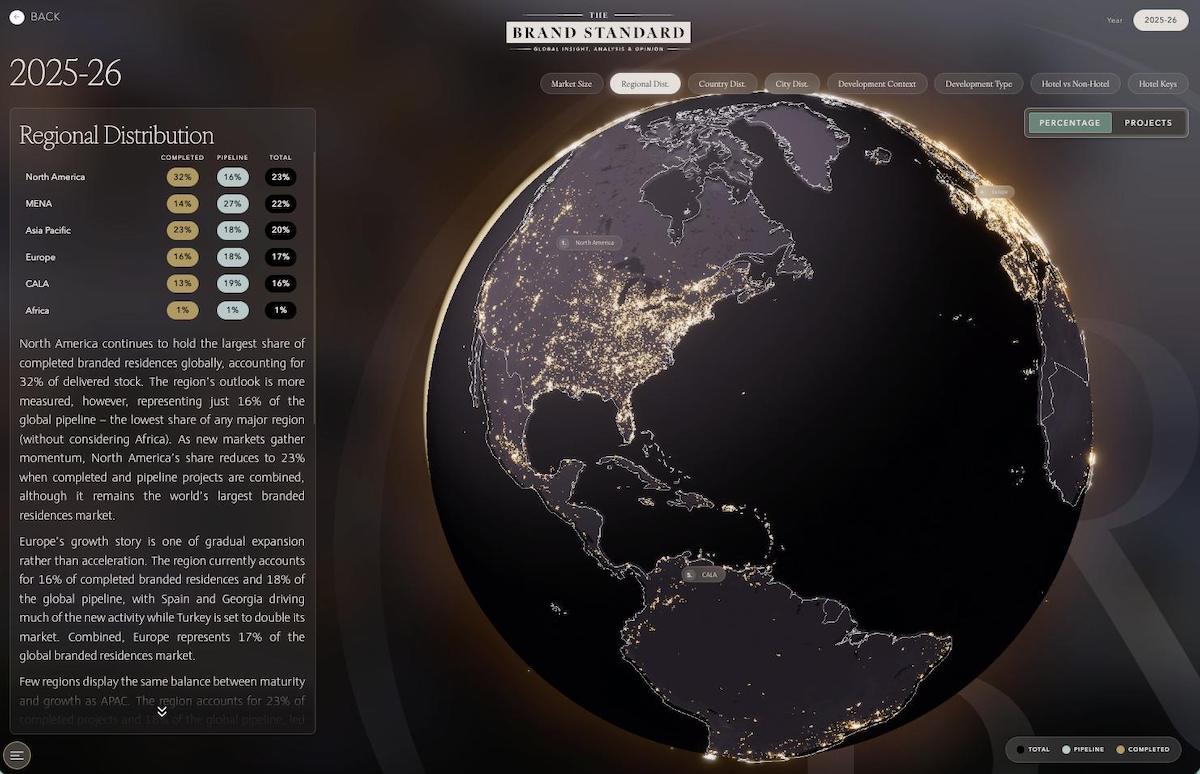
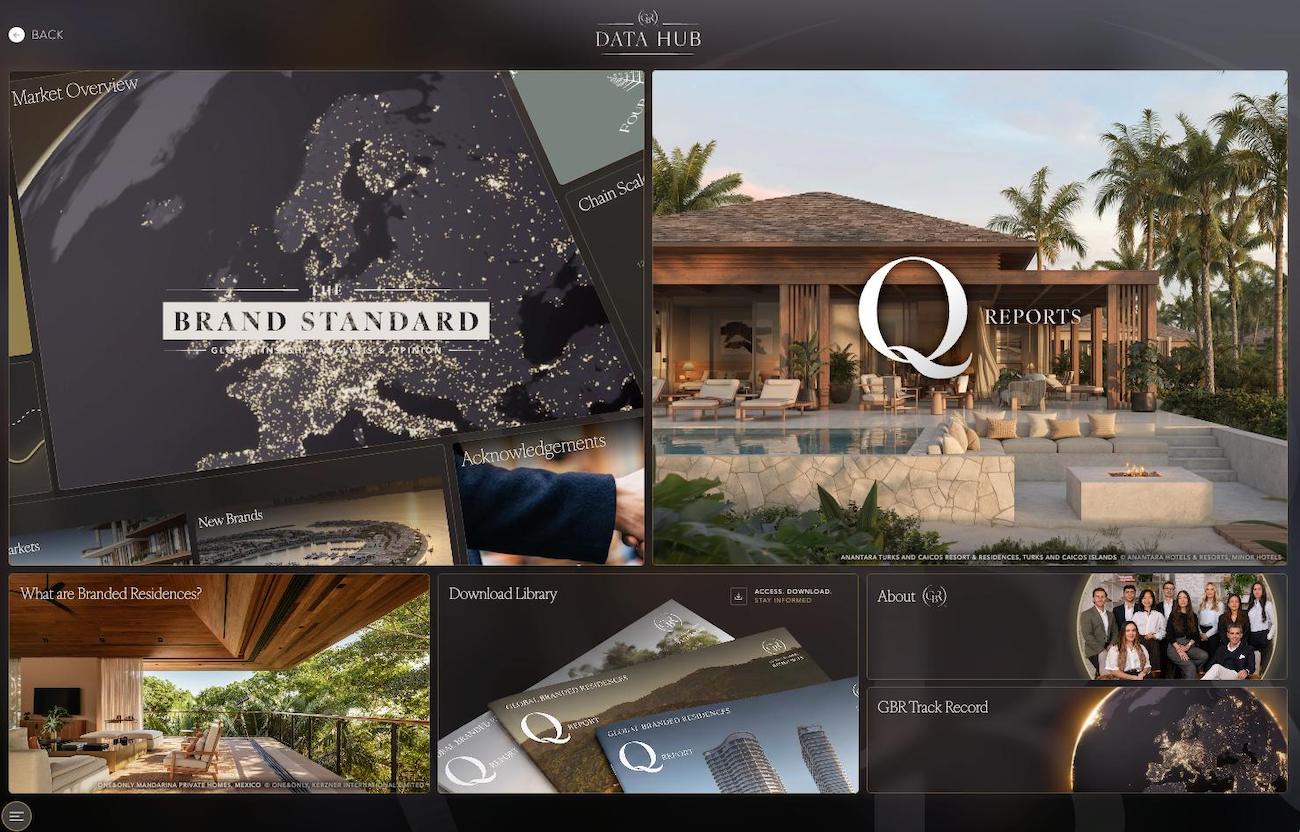
On 5 October, specialist advisory firm Global Branded Residences (GBR) launched the GBR Data Hub, an interactive platform giving the industry direct access to the firm’s proprietary research, market data and analysis. The platform debuted alongside The Brand Standard, GBR’s annual report covering a full calendar year of market activity.
Jason Payne sat down with GBR founder Riyan Itani to get more detail on the platform and what it could mean for the industry.
Discussion centered around the thinking behind the Data Hub, how the data is gathered and checked, the challenges around consistency and classification, the brand premium, and what easier access to all of this could change for developers, investors, brands and operators.

JP: Firstly, before I begin with my questions, I would like to say congratulations on the development of The GBR Data Hub and The Brand Standard. I have been saying for many years that data in our industry has little or no consistency, so I think what GBR is doing is both timely and important for the sector.
RI: Thanks, Jason. You’ve always been a strong supporter of the sector and of GBR and me personally, so we appreciate the chance to talk to you about the Data Hub and the Brand Standard and share some of the important context behind it.
It’s a really exciting moment for GBR to share the painstaking research we have been conducting over almost four years with the industry and, for the first time, the public.
JP: You have been tracking and presenting branded residences market data for many years. What prompted you to take that existing body of data and create the GBR Data Hub, and what do you want to achieve by doing so?
RI: We want to help make this a more open-source industry and disrupt the status quo of annual reports. The data behind those reports usually stays with whoever compiled it. If developers, investors and brands are going to research and invest with confidence, they need to be able to see that data for themselves, so we’ve opened up our books.
The Brand Standard is our inaugural annual report and we’ve produced it as a PDF too. Reports like that are still important. They’re easy to absorb, they look good and clients, including developers, investors and brands, see real value in them, so they’re a great way to share our knowledge in a digestible format. What we wanted on top of that was to create the world’s first interactive platform that goes beyond the static PDF.
It allows readers to go into the data and find what matters to them, whether that’s a specific market, development type or a particular question they’re trying to answer.
The Data Hub is where The Brand Standard lives, alongside our other reports, articles and insight on the sector, giving brands, developers, investors and buyers a single home for our data and analysis.
JP: Market intelligence in the branded residences sector has traditionally been presented through annual reports. Given the pace at which the industry is evolving, what are the limitations of this approach, and how will making the underlying data interactive benefit developers, investors, brands and operators?
RI: One of the big differentiators of our data is that we collect it on a quarterly basis throughout the year, compared to other organisations who collect data annually.Our approach provides a more real-time picture of the market, which is increasingly important given the rapid rate of new signings and project openings.
Consistency is also critical in this sector and anyone who publishes data has to keep working at it, including us. Figures vary between sources largely because people are counting different things and in different ways. One report might include projects another wouldn’t consider a branded residence, for example.
The majority of our data comes directly from the brands themselves, which gives us a strong starting point, but at GBR we go a step further and conduct firsthand research into every available aspect of each development. This ranges from the ratio of hotel keys to residences, right through to the square footage of residents’ lounges and even the length of the swimming pool.
GBR’s mission has always been to go further and deeper into the subject matter than any other firm globally, and our proprietary database is testament to the dedicated research we have conducted over the past three and a half years.
We have a team of four researchers, supported by a Data Manager, working tirelessly to build the fullest possible picture at the most granular level.
JP: How does GBR verify the information going into the Data Hub, and how will the data be kept up to date?
RI: What the brands report to us is where verification starts. Our research and data teams then check each project against what they’re seeing in each market, from sales launches and planning activity to completions. Our advisory work helps here too. GBR has advised on more than 250 branded residential developments across more than 50 countries, so we’ve got people and partners in most of the markets we track who know what’s being built.
There have even been numerous instances of us directly questioning the validity of submissions provided to us by brands and operators to ensure the highest level of accuracy and consistency as possible.
Opening our data up on the Data Hub also helps keep it reliable. The more people use the data and question it, the faster anything that needs correcting gets picked up and the more the data improves – something we are passionate and committed to!
JP: I’d like to press you on the data problems I see regularly. Some companies include projects that aren’t branded residences, sometimes thousands of rooms at once, which skews regional positioning, global project counts and the average brand premium. Many projects that have been withdrawn from the market also remain in pipeline figures.
So how will GBR define a branded residence, and how will you monitor the data to make sure stalled projects aren’t included
RI: There’s a lot of confusion in the market and there’ll continue to be as the model takes on different forms, so we’re clear with our contributors about where we draw the line. Fractional ownership, timeshare and serviced apartments aren’t classified as branded residences, so they aren’t in our data. Condo hotels which are purchased purely for investment purposes still count within our definition.
The differentiator for us is more about the structure of ownership than the motivation behind the purchase. For example, a purchaser could buy a luxury apartment and place it entirely within a rental programme, in which case, aside from the size and price of the apartment, there may be very little practical difference from the example you describe.
We work closely with the contributors of the data to ensure that withdrawn projects are accounted for and as with any data, we have to question, enquire and investigate for ourselves.
JP: Regarding the brand premium, it is often misused, misunderstood and normally confined to regional figures. Will the Data Hub cover data country by country, and if not, is this something you would consider for the future?
RI: Our global average brand premium is 44%, on an unweighted basis. It measures the percentage difference between what a branded residence sold for and what a comparable property in the same market sold for, averaged equally across every transaction in the dataset regardless of size. We also break the premium down by region, by development context such as resort or urban and by chain scale.
We’re fortunate to carry out 20-30 brand premium studies a year for some of the leading names in the industry, which gives us a strong base for our global and regional figures. A reliable country or city figure needs a larger sample again.
One of the obvious challenges is that each consultancy reporting a global premium figure can only do so based on the dataset it has collected, which will inevitably differ from that of another firm. That’s why one of the open-source initiatives we’re pursuing is to combine the datasets held by several consultancies.
A bigger shared sample would make the premiums published across the industry more accurate. Country-by-country figures are firmly on our radar, so watch this space.
JP: Staying with brand premium, I personally think that a brand premium calculation for the resale market would be extremely helpful, to see if the initial premium paid has held up during ownership. I would love to get your opinion on this?
RI: This is an interesting one. We carried out a number of resale premium studies for a hotel operator last year and the findings were surprising. What we found was that while the premium does hold up over time, capital values in branded residences actually grow more slowly than in the non-branded market. This is because they are already fully priced, so outside of inflation there’s less room for prices to rise.
Perhaps the most interesting finding was that during the global financial crisis and COVID, branded residence values fell far less than the wider non-branded market. Part of that is a flight to safety. When markets fall, people move towards assured assets and the brand brings that assurance.
Another factor is that during the credit crunch branded projects suffered less because purchasers are generally buying with cash rather than debt.
All in all, this means that branded residences are more resilient to price shocks due to macroeconomic factors.
JP: Alongside the Data Hub, GBR has also launched The Brand Standard, your annual branded residences report. How does the report work alongside the Data Hub, and what does combining the two give users?
RI: The GBR Data Hub is Global Branded Residences’ interactive market intelligence platform. It brings GBR’s proprietary research, market data and analysis on the branded residences sector together in one place for developers, investors, brands and operators.
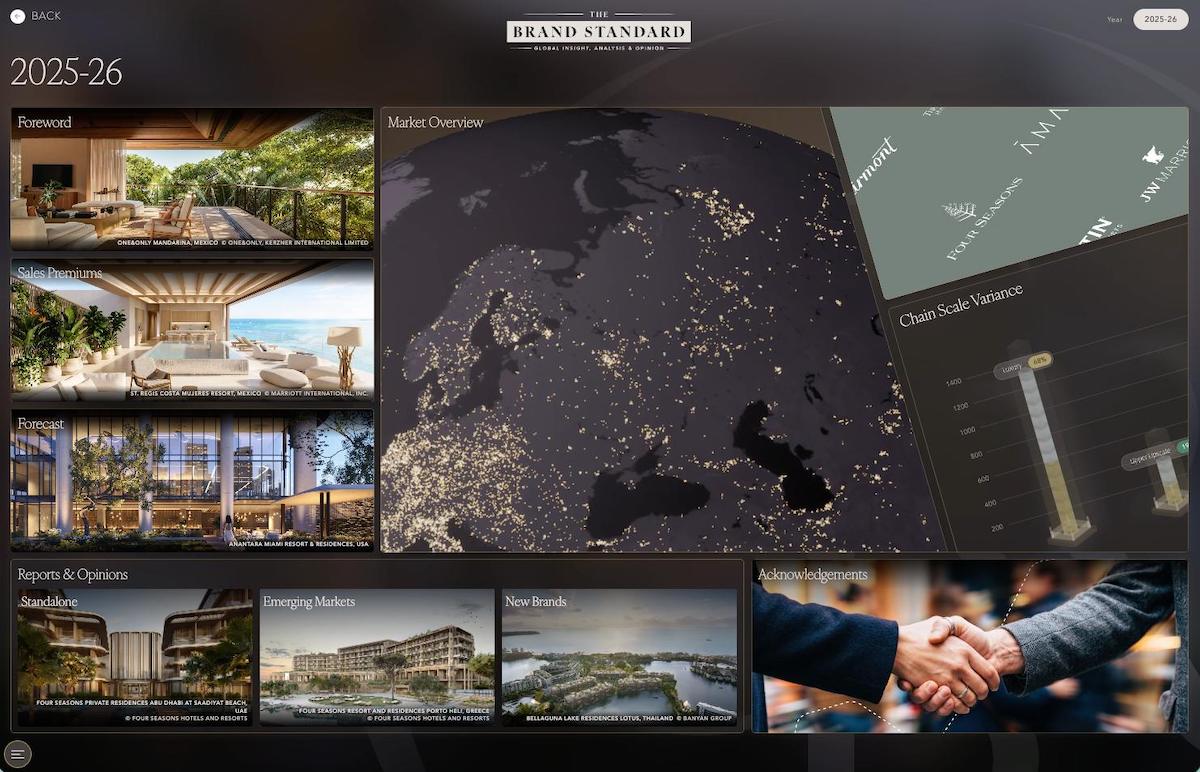
The Brand Standard, GBR’s inaugural annual report, lives on the Hub. The report covers a full calendar year of market activity. It can be downloaded as a PDF or read as an interactive digital edition on the Hub, where readers can move from its findings into the underlying data and explore the markets and projects relevant to them.
The Hub is also home to GBR’s quarterly report for industry players, along with articles and other insight on the sector.
JP: Finally, Riyan, is there anything else you would like to say about both The Data Hub and The Brand Standard, and where can our readers access them?
RI: It’s taken years of hard work to get here and we’re looking forward to what this opens up for people in the industry. We see the Data Hub as an industry resource and we’d welcome conversations on how to expand and improve it over time. We want to give people the data and insight they need to work on projects, understand markets and succeed in this sector.
Both the GBR Data Hub and The Brand Standard are available now at www.gbrdatahub.com as well as through our main company website www.gbresi.com
About Global Branded Residences
Global Branded Residences (GBR) is a specialist development consultancy firm that provides market and data-driven advisory services for branded residential developments around the world, delivered by a team of renowned industry leaders. GBR holds a track record that includes advising on more than 250 branded residential developments across more than 50 countries.