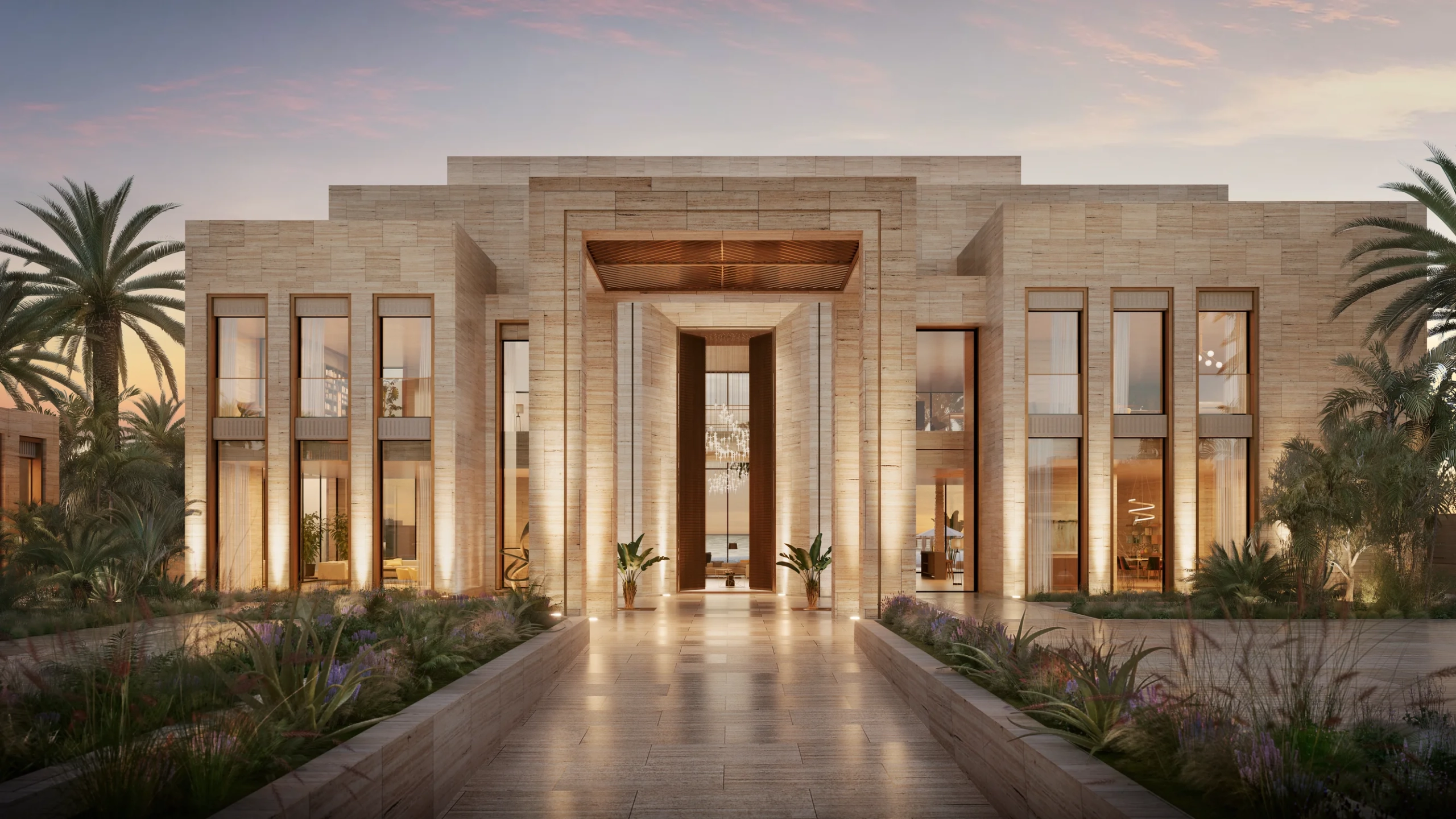
BRESI OVERVIEW: Mandarin Oriental Mansions Abu Dhabi
- Emirates Palace Company, Mandarin Oriental Hotel Group and real estate developer Lead Development have announced plans for 35 private Mandarin Oriental Mansions within the grounds of Abu Dhabi’s Emirates Palace, with completion expected in 2029.
- The project marks the first time private ownership has been made available within the Emirates Palace precinct, one of the UAE’s most prominent civic and hospitality landmarks since it opened in February 2005.
- The Mandarin Oriental mansions will sit within an 84-hectare stretch of Abu Dhabi’s Corniche, close to Qasr Al Watan and the Founder’s Memorial, in an area considered central to the capital’s civic identity.
- Mandarin Oriental Hotel Group will manage the residential hospitality and services, with the architectural design drawing on Abu Dhabi’s coastal character through a focus on privacy, gardens, courtyards and shoreline access.
- Pricing for the mansions was not disclosed at the announcement, though board member Humaid Matar Al Dhaheri said the development reflects growing confidence in Abu Dhabi’s real estate sector and its position as a hub for urban innovation.
Emirates Palace Company, LEAD Development, and Mandarin Oriental Hotel Group introduce Emirates Palace, Mandarin Oriental Mansions, Abu Dhabi
Emirates Palace Company (EPCO), together with LEAD Development and Mandarin Oriental Hotel Group, today announced Emirates Palace, Mandarin Oriental Mansions, Abu Dhabi, a limited collection of thirty-five uniquely designed private residences located within the grounds of Emirates Palace.
The development marks the first-time private ownership has been introduced within one of the UAE’s most historically and institutionally significant destinations. Completion is anticipated in 2029.
For more than two decades, Emirates Palace has occupied a singular place within the civic and cultural life of the United Arab Emirates. Positioned along Abu Dhabi’s ceremonial coastline, the Palace has served as a setting for state visits, international gatherings, and moments central to the public identity of the nation.
The development forms part of Abu Dhabi’s continued evolution as a global cultural, hospitality, and lifestyle capital, where architecture, long-term stewardship, and thoughtfully planned infrastructure and real estate development continue to shape the identity of the city.
This development brings together three partners. EPCO, owner and custodian of the Emirates Palace precinct, oversees one of the nation’s most recognised civic and hospitality landmarks. LEAD Development leads the planning and development of the residences, drawing on its experience delivering integrated placemaking and destinations across the UAE.
Mandarin Oriental Hotel Group will oversee the residential hospitality experience and services for the mansions.
Mandarin Oriental Mansions, Abu Dhabi
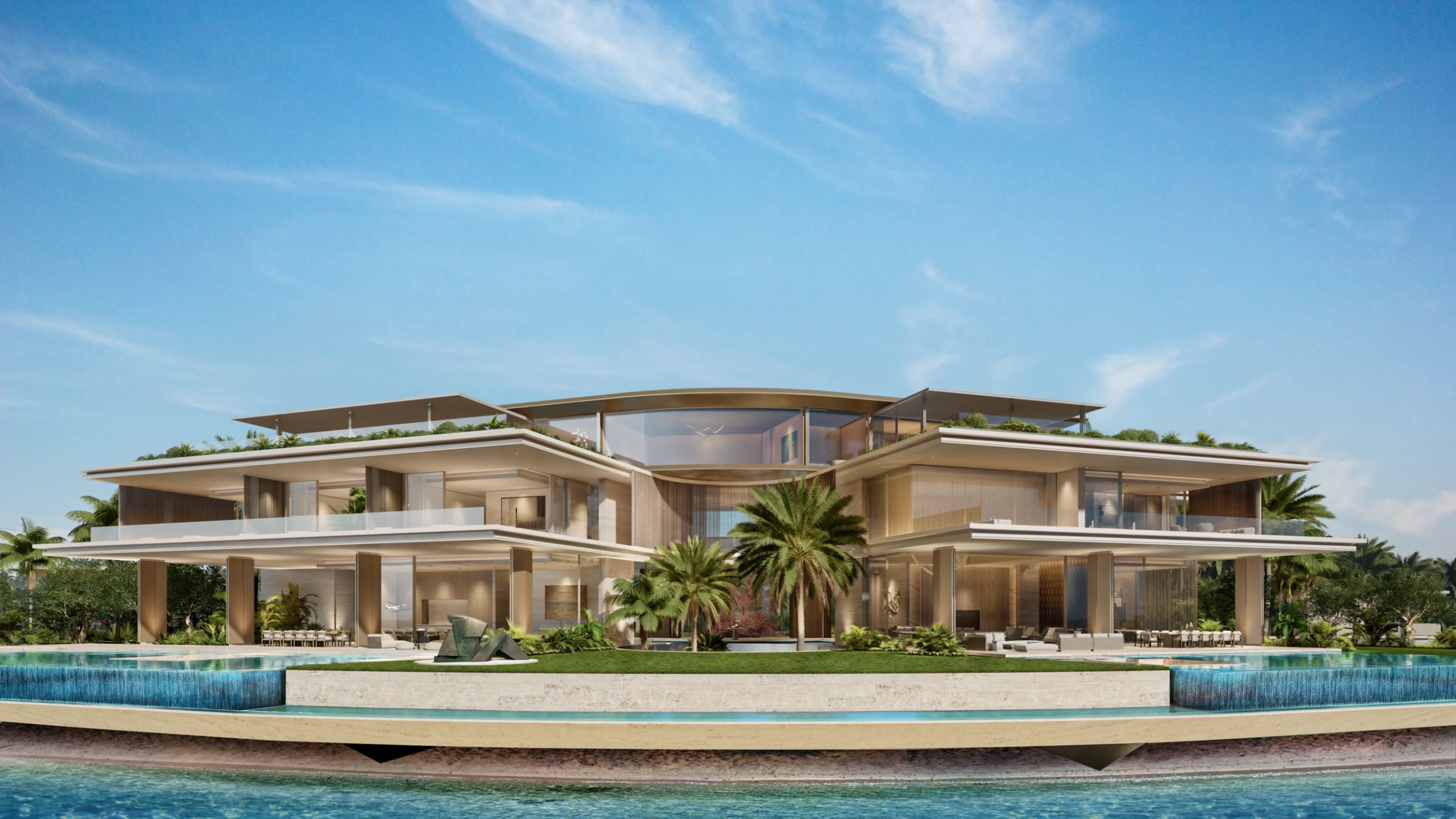
Positioned along one of Abu Dhabi’s most important natural shorelines, the residences sit within the axis connecting Qasr Al Watan, the Founder’s Memorial, and the timeless Corniche, a part of the capital where civic identity, coastline, and public life converge. Few residential settings in the region carry comparable cultural and national significance.
The architectural language draws from Abu Dhabi’s coastal vernacular through a contemporary expression shaped by proportion, light, landscape, and privacy. The residences are organised around gardens and courtyards, oriented toward the shoreline and surrounding landscape.
Privacy is approached not as an amenity, but as an architectural condition embedded within the planning of the homes themselves.
Life within the grounds of Emirates Palace has always been defined by discretion, calmness, and hospitality at an intimate scale. The residences extend that sensibility into private living through quiet arrival sequences, generous interior spaces, and direct access to a reserved stretch of shoreline.
A collection of private hospitality and wellness spaces curated by Mandarin Oriental continues this experience through a philosophy rooted in attentiveness to service.
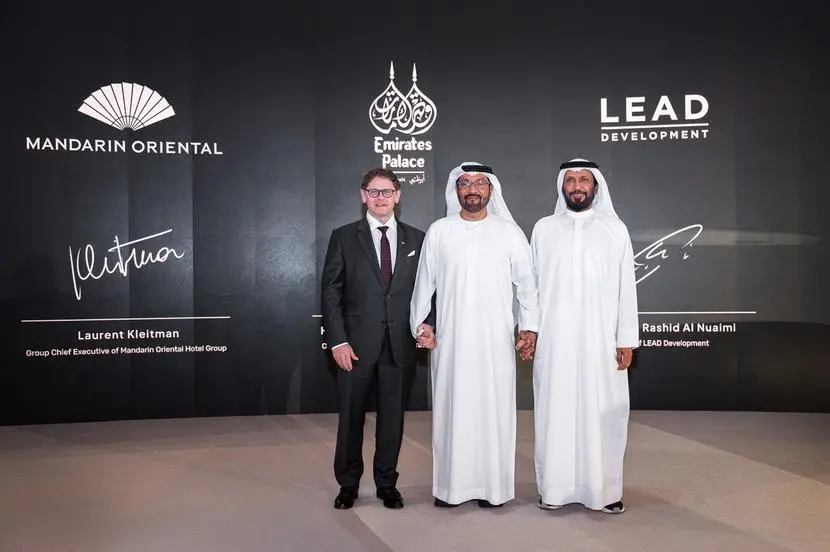
Commenting on the announcement, H.E. Humaid Matar AlDhaheri Board Member at Emirates Palace Company (EPCO), said: “This development represents a significant addition to the urban landscape of the Emirate of Abu Dhabi and reflects the growing confidence in its real estate sector. Its association with Emirates Palace grants it exceptional value, as the Palace is considered one of the region’s most iconic landmarks. This, in turn, contributes to reinforcing Abu Dhabi’s position as a capital of urban innovation and quality of life.”
Mounir Haidar, Co-founder & Managing Partner of LEAD Development, added: “Building within the grounds of Emirates Palace is a responsibility we do not take lightly. Our mission is to ensure the residences belong naturally within the broader architectural and cultural context of the Palace and Abu Dhabi. This is not simply a residential address, but part of placemaking hospitality with a context that will continue to further position Abu Dhabi as a unique destination in the region.”
Laurent Kleitman, Group Chief Executive of Mandarin Oriental Hotel Group, said: “Abu Dhabi continues to distinguish itself internationally through the depth of its cultural identity, the quality of its hospitality, and the clarity of its long-term vision. Emirates Palace, Mandarin Oriental Mansions, allows us to further our relationship with the capital through a residential experience rooted in discretion, craftsmanship, and thoughtful service. We are honored to contribute to a setting that holds such significance within the region.”
Since opening, Emirates Palace has stood as one of the defining landmarks of Abu Dhabi’s coastline and public life. Emirates Palace, Mandarin Oriental Mansions introduces a limited residential chapter within that setting for the first time, quietly opening part of the Palace grounds to private stewardship while remaining deeply connected to the identity of the capital around it.
Thirty-five families will live where, until now, only the Palace has stood.