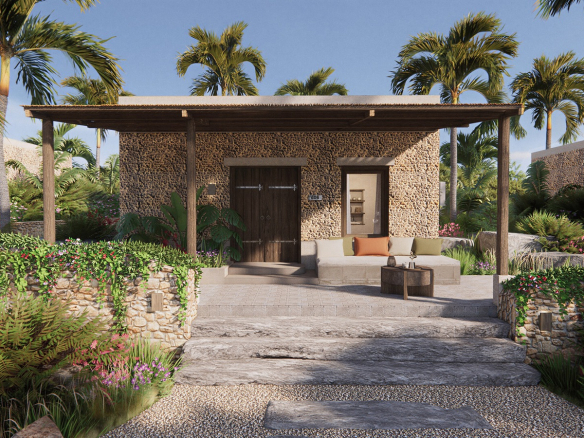
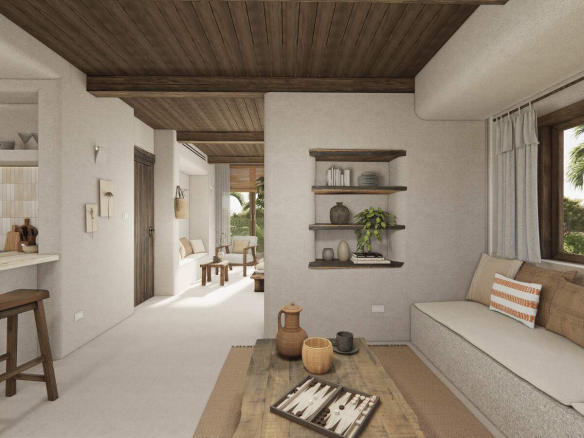
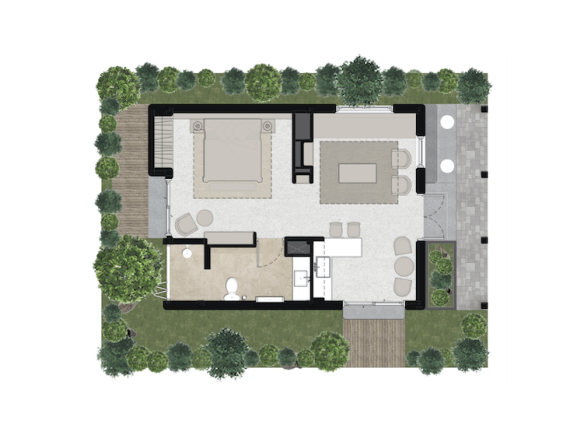
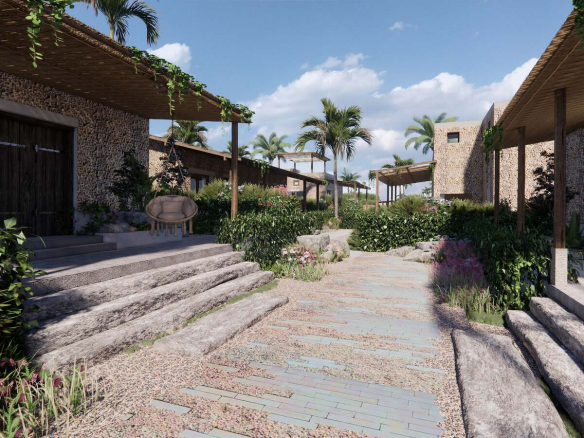
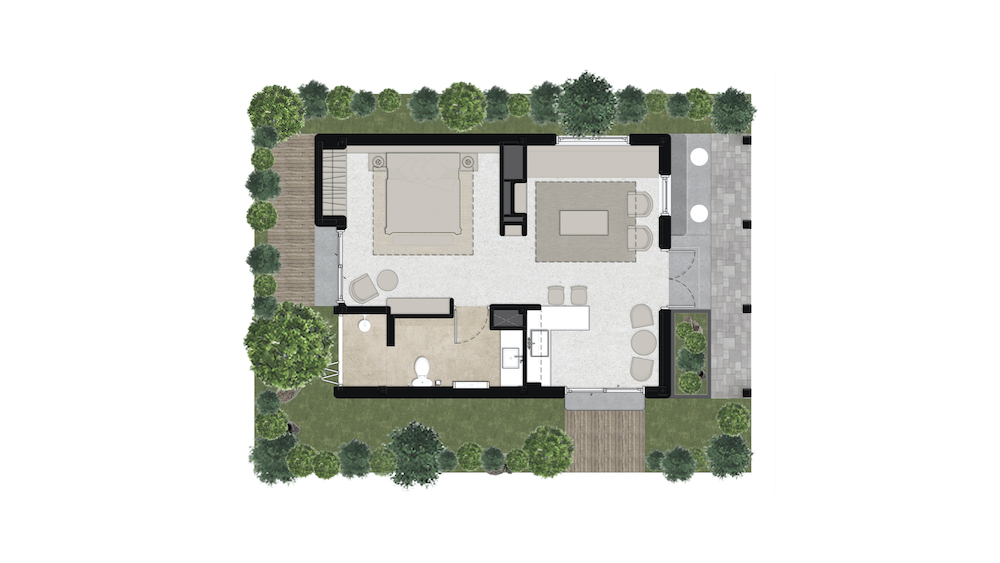
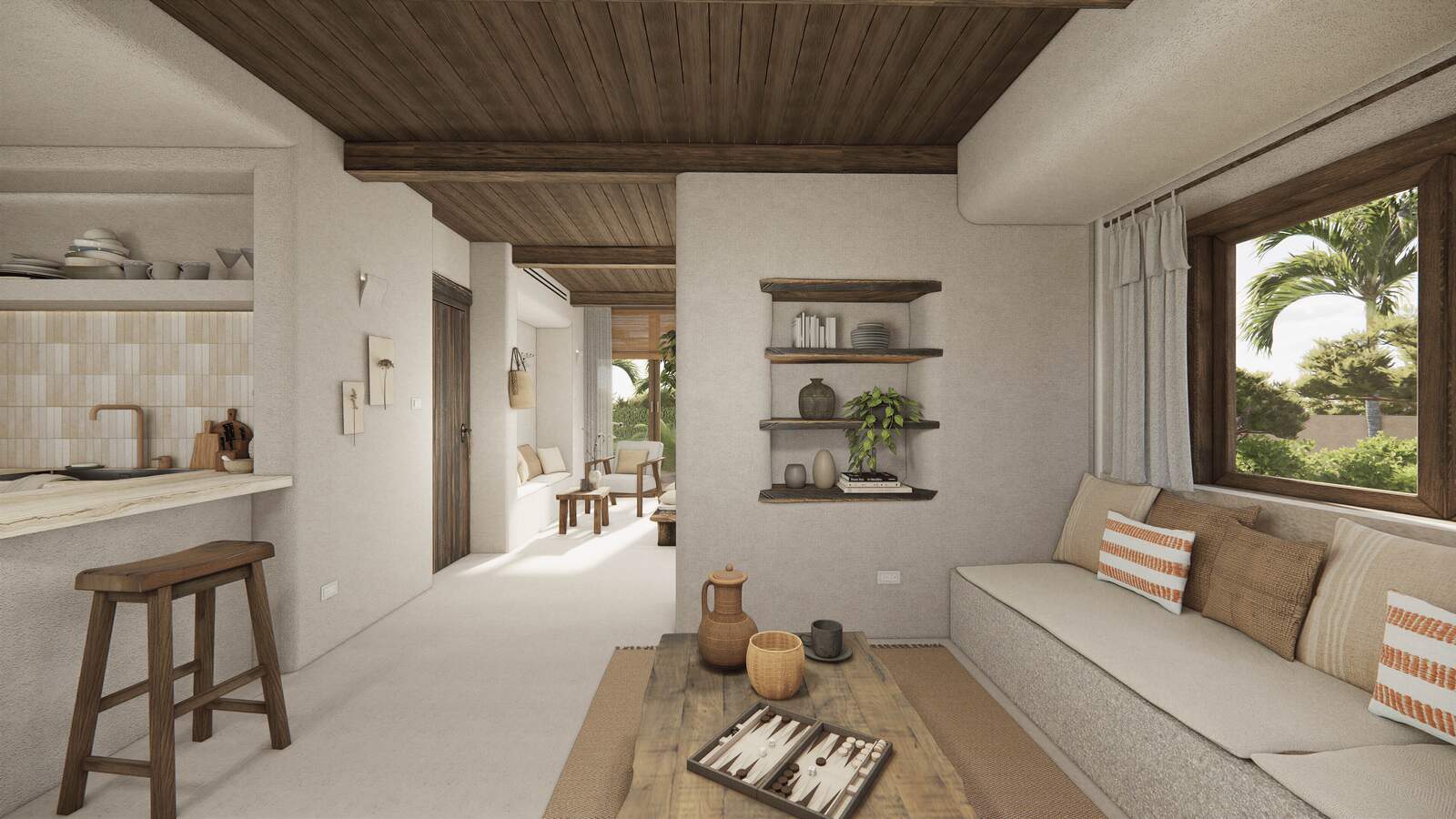
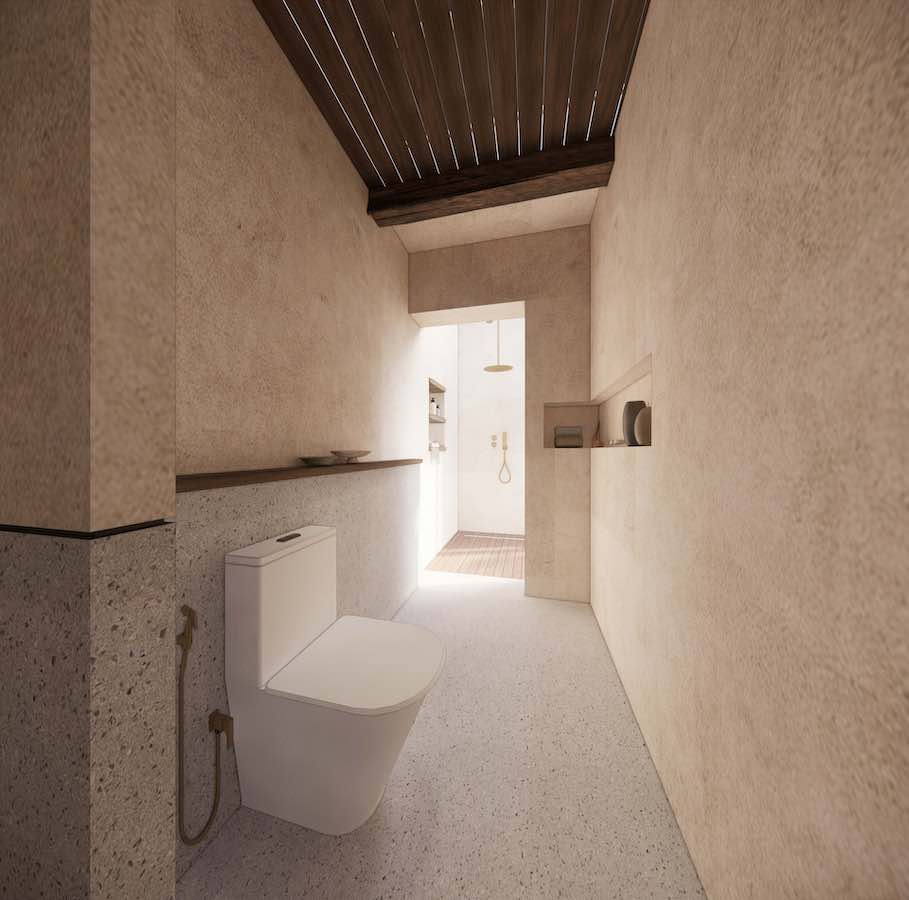
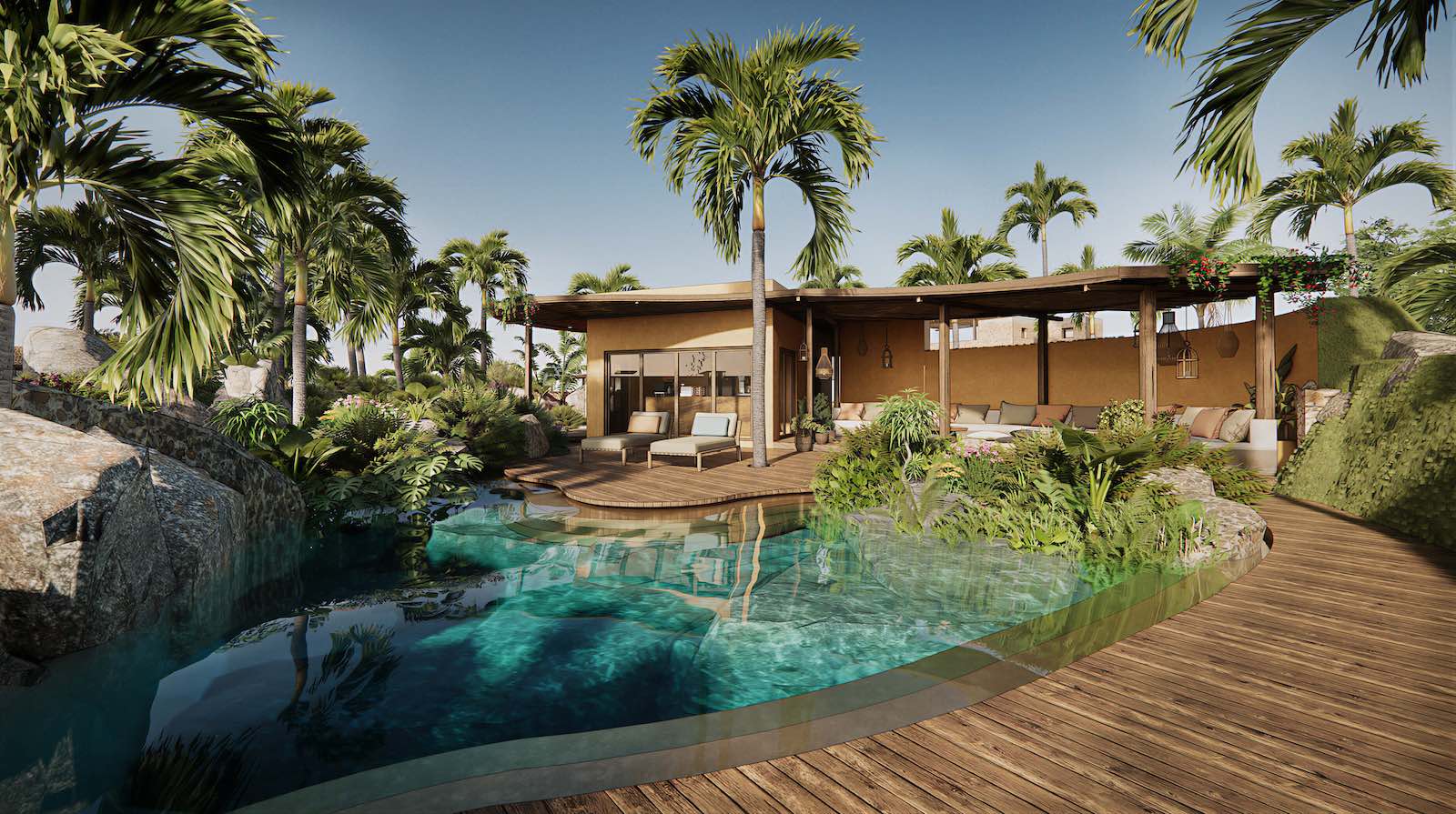
The Makao Villa at Liyongo is a detached one-bedroom villa with a wide veranda, extended open-living area and garden. The villa has an internal area of 57 m², with a total plot area of 159–160 m², including the garden and terrace. Makao is available across Phases 1–2, with prices starting from US$195,000.
Owners can enjoy three weeks of personal use each year, with all villas participating in a mandatory rental pool operated by the hospitality team. Rental income is pooled and distributed among owners, with the shared model designed to maintain consistent operational standards and guest experiences throughout the year.
Hospitality operations will be led by a team with experience across international hotel groups and boutique properties in East Africa and the Indian Ocean. Villa ownership is structured as individual title ownership under Tanzanian property law.
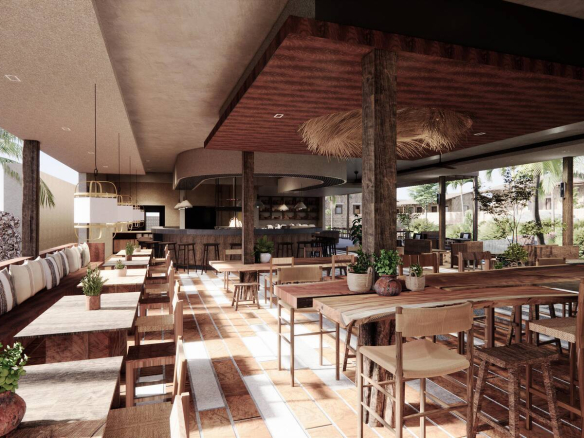
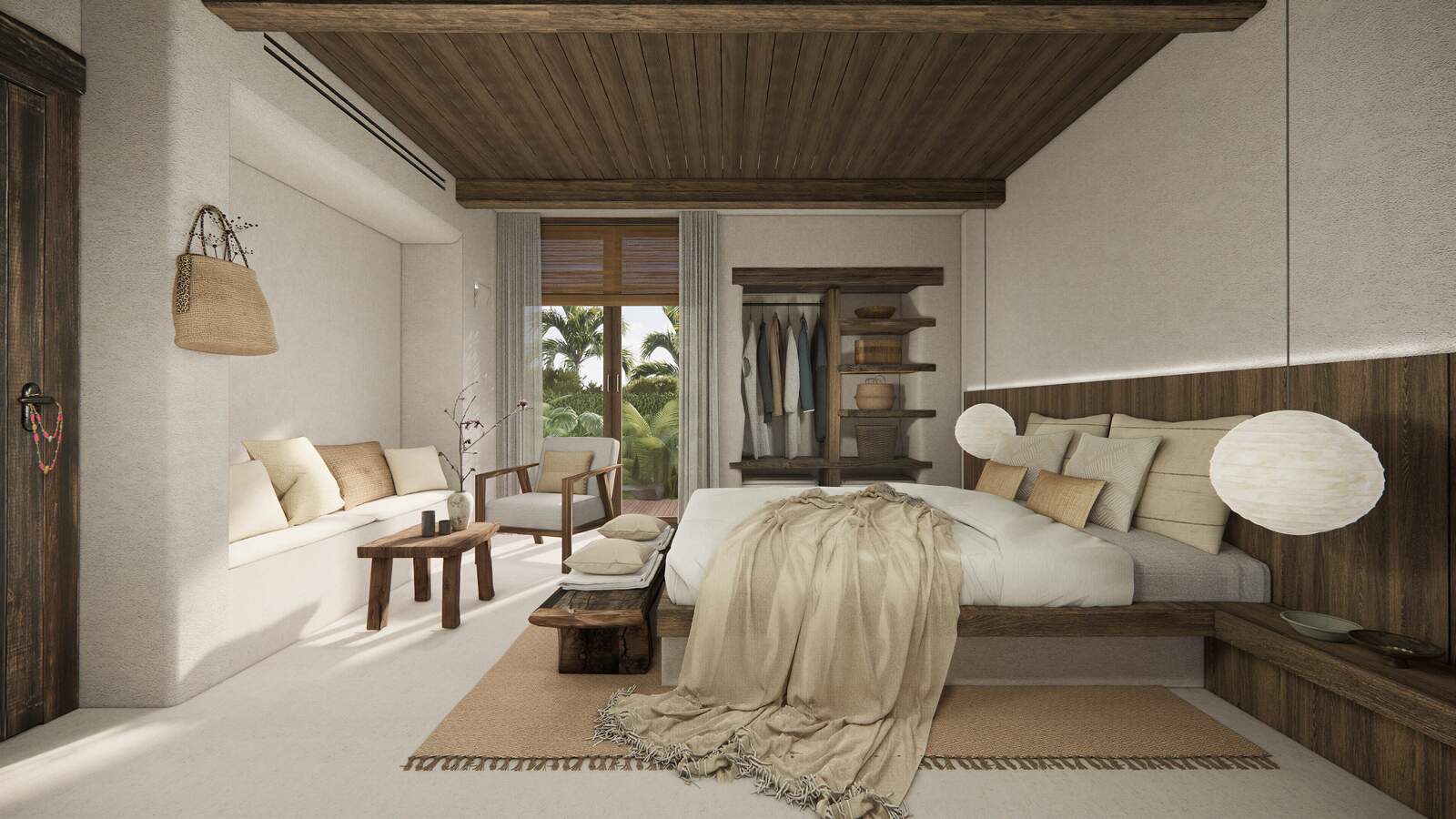
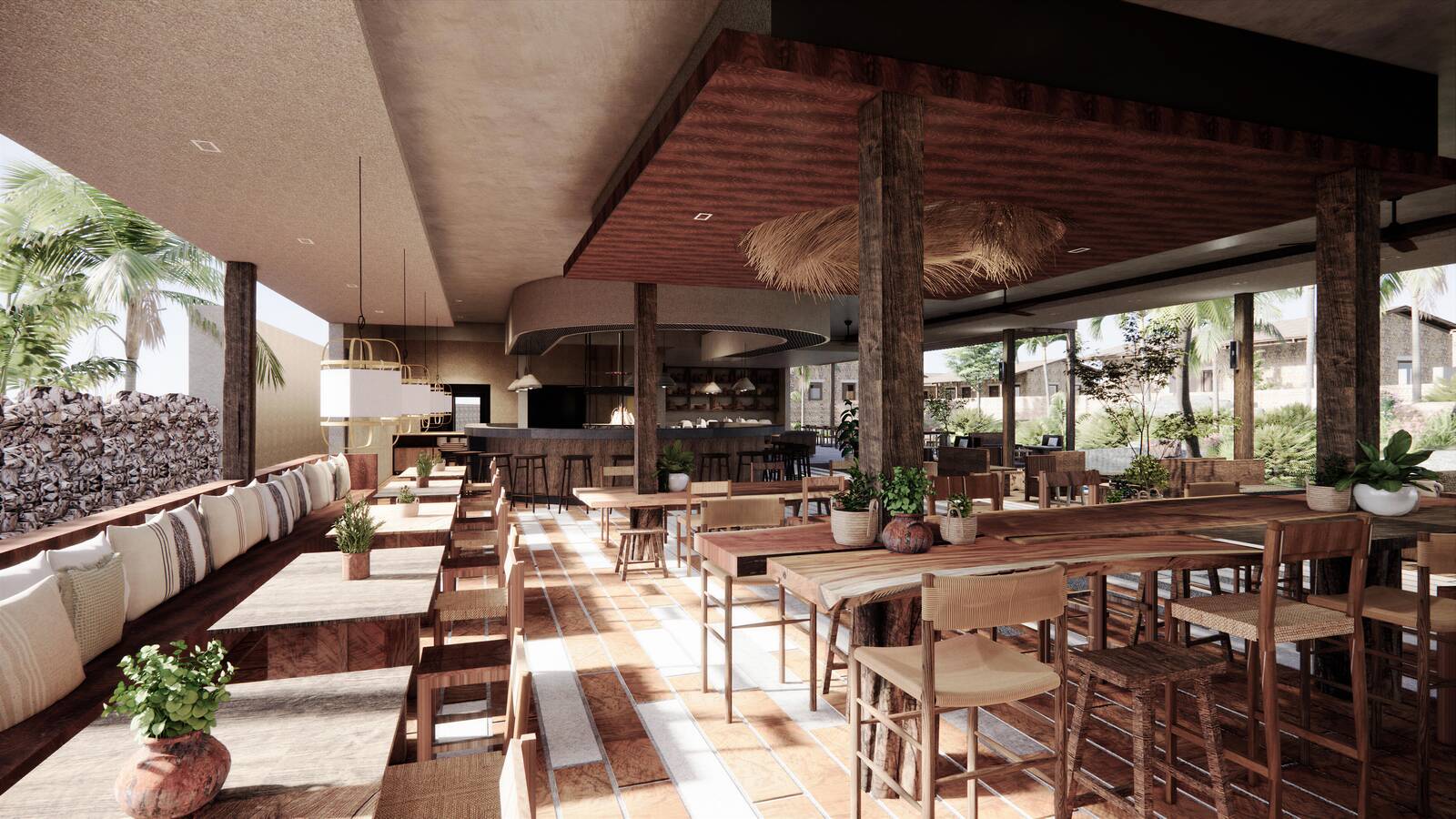
The Makao Villa is furnished in a tropical style designed for the local climate, with lasting comfort and appeal for owners and guests year after year. Each villa type has its own interior design, with materials and finishes selected to withstand salt air and humidity. Furniture, fittings and equipment are included in the sales price. Images are indicative and final selections may vary.
The minimum average daily rate charged to guests staying in this one-bedroom, detached villa is expected to be approximately US$295.
Liyongo Kendwa, Zanzibar
Liyongo is a 60-villa residential development in Kendwa, on the north-west coast of Zanzibar, designed as a contemporary interpretation of a Swahili coastal village. The project combines private villa ownership with professionally managed resort operations, offering owners seasonal use rights within a year-round hospitality structure.
Inspired by Swahili coastal architecture, the project combines traditional materials and design principles with contemporary interiors, tropical gardens and private outdoor spaces. Its approach centres on cultural authenticity, a connection to place and a relaxed coastal lifestyle, guided by three brand pillars: curiosity, conscience and community.
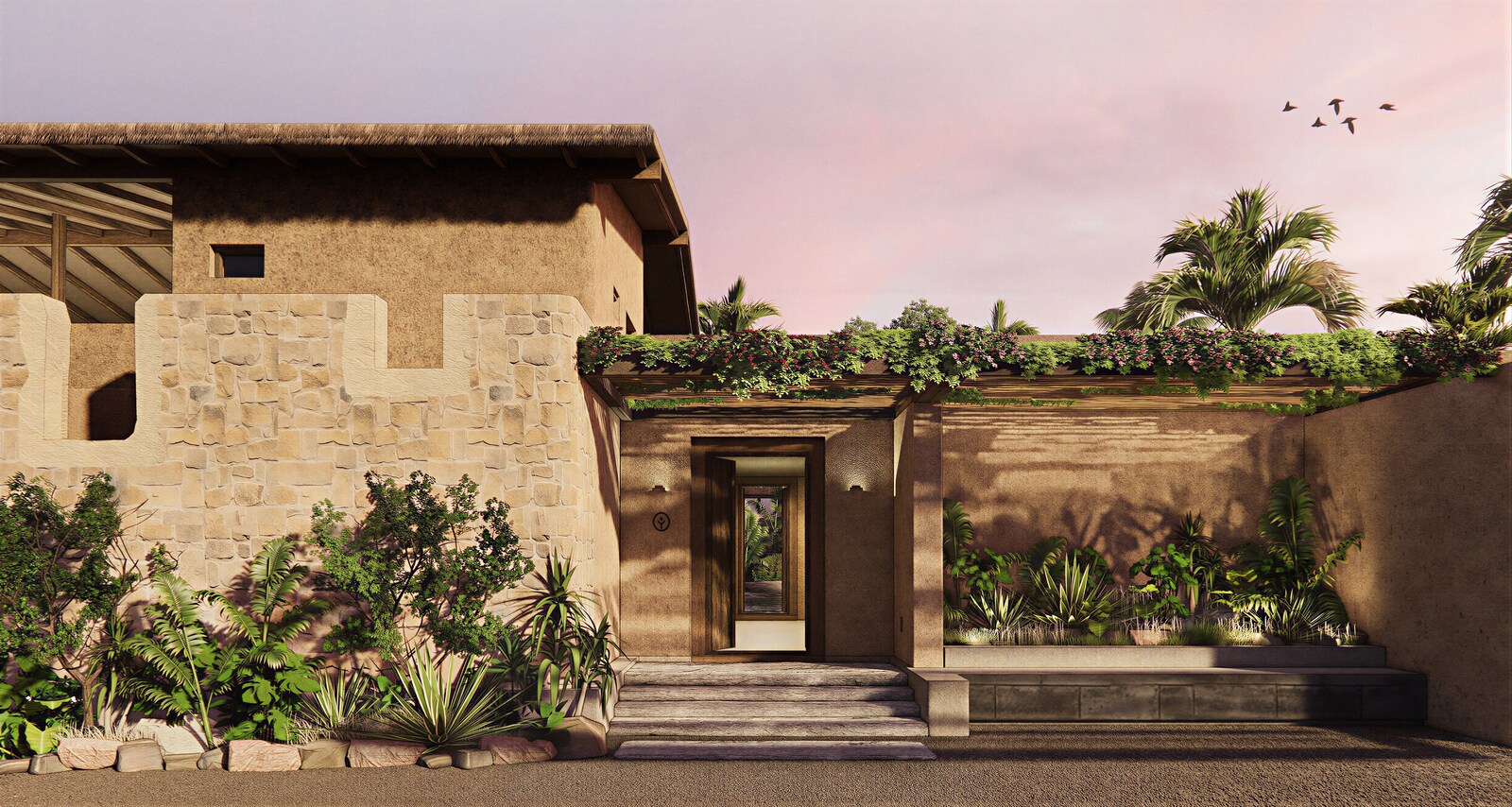
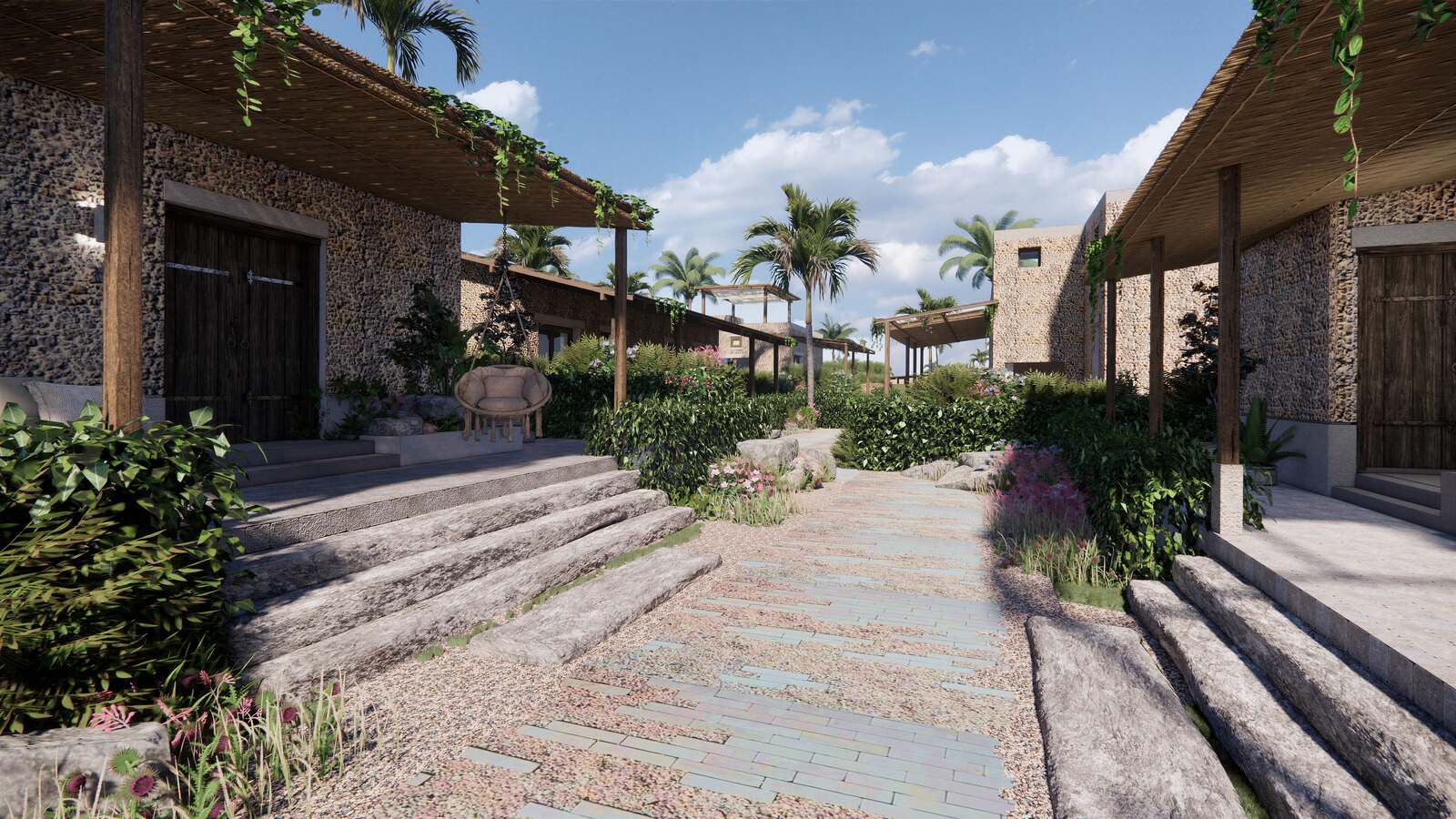
The architectural design of the villas and resort draws on local building traditions, incorporating coral stone, makuti roofing, lime-plastered walls and shaded courtyards. The villas feature en-suite bathrooms, full kitchens or kitchenettes, and private outdoor living areas. Larger villas will also offer rooftop terraces and plunge pools. Shaded pathways, verandas and landscaped communal spaces create a village-style setting within easy walking distance of Kendwa Beach.
Owners can enjoy three weeks of personal use each year, with all villas participating in a mandatory rental pool operated by the hospitality team. Rental income is pooled and distributed among owners, with the shared model designed to maintain consistent operational standards and guest experiences throughout the year.
Hospitality operations will be led by a team with experience across international hotel groups and boutique properties in East Africa and the Indian Ocean. Villa ownership is structured as individual title ownership under Tanzanian property law.
Liyongo – A Village Within a Village
The masterplan is organised as a village-scale settlement rather than a conventional resort compound, with villas arranged around shared courtyards, pedestrian pathways and communal gathering spaces. Density is deliberately restrained, prioritising human scale, walkability and visual permeability over unit yield.
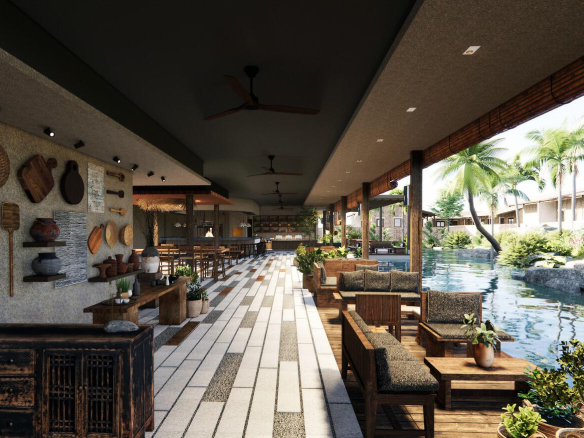
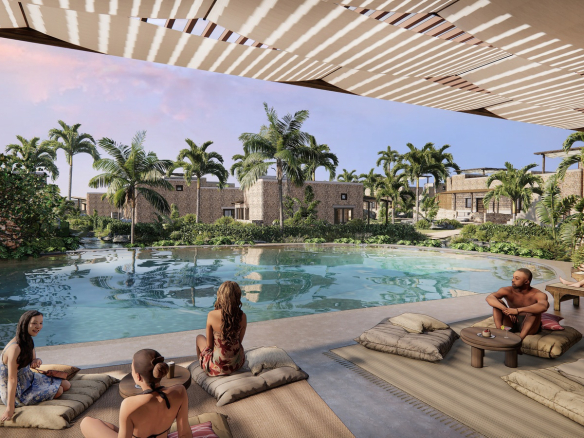
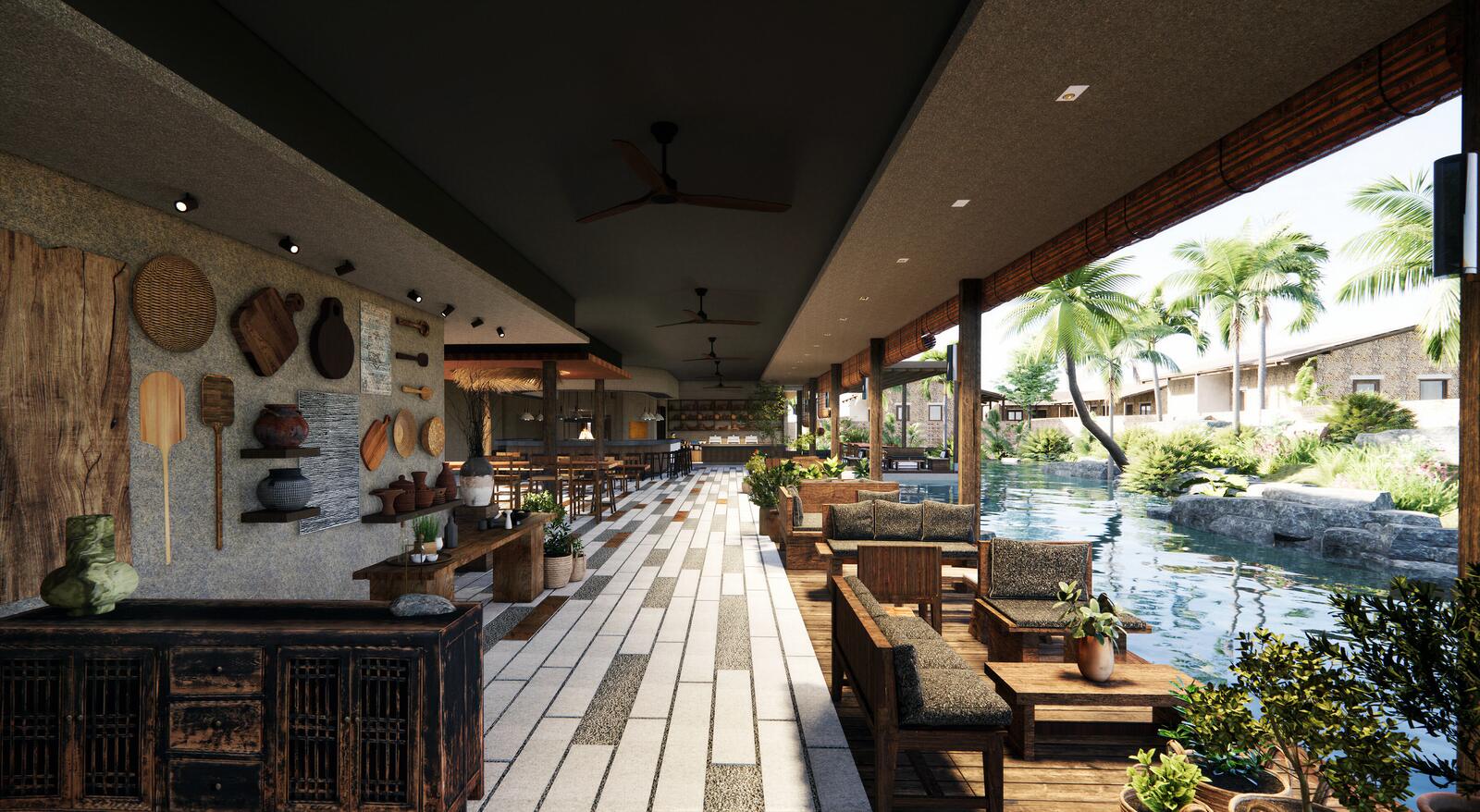
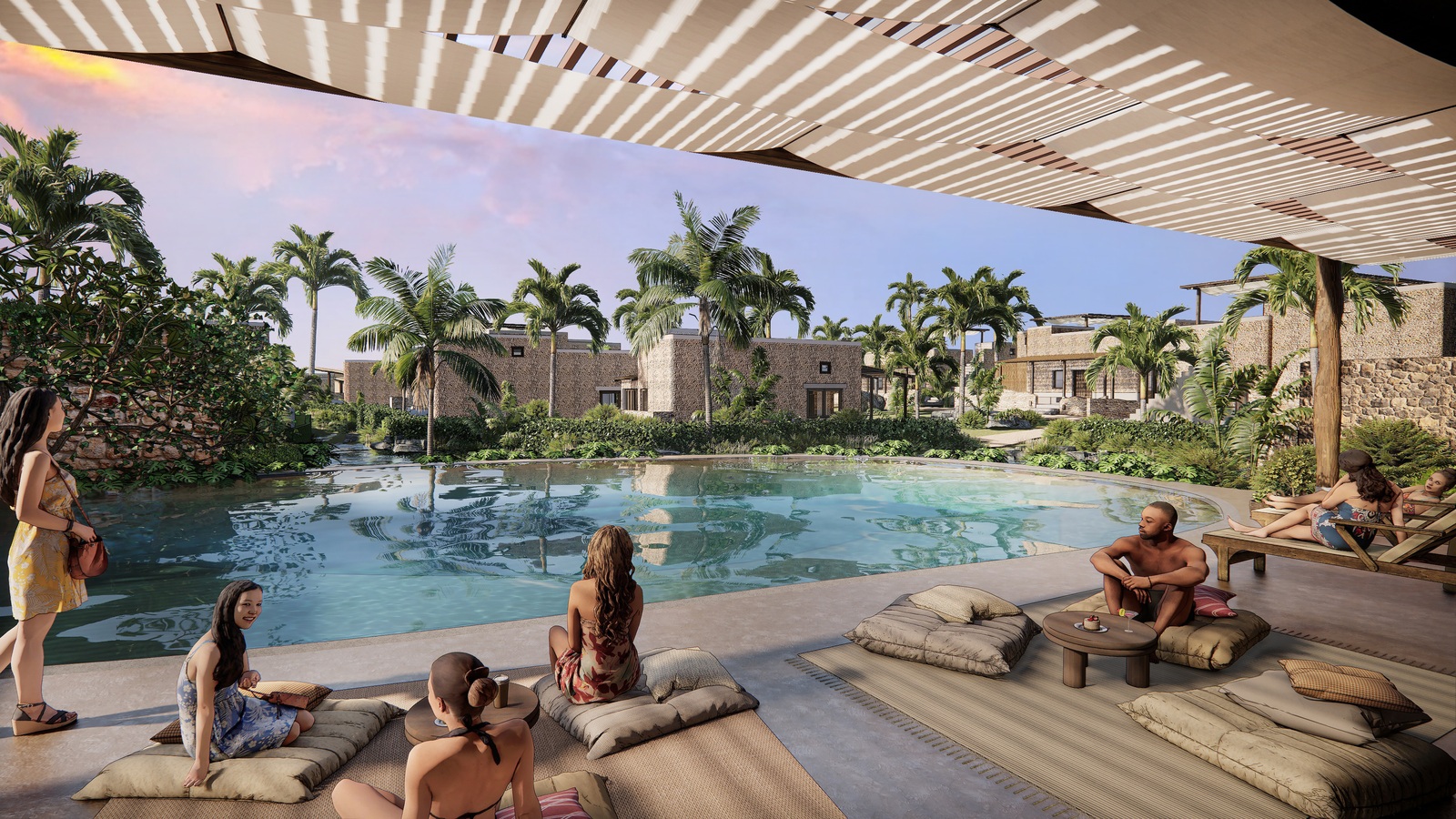
Passive cooling strategies include cross-ventilation, high ceilings, shaded terraces and water features. Open boundaries allow landscape, architecture and social activity to overlap, while the spatial hierarchy moves from private villa interiors to semi-private garden terraces and rooftop spaces, then to communal amenities including a lagoon pool, dining centre, artisan village and spa facilities.
The layout concept is intended to encourage organic social interaction through movement between shared spaces.
The architectural team includes an internationally recognised designer with an established portfolio across Southeast Asia and the Indian Ocean region. Local contractors and artisans are integrated into the construction and finishing process where their skills and capacity align with project standards.
Villa Types – Homes That Breathe With The Breeze
Kwetu Villa: Studio (50m2): Semi Detached Studio with king bedroom, kitchenette, ensuite, garden terrace.
Makao Villa: 1 Bedroom Villa (57m2): Detached, open-plan villa with full kitchen, living area, ensuite, garden terrace.
Kaya Villa: 1 Bedroom Plunge Pool Villa (69m2): Detached with extensive open plan footprint and plunge pool, garden terrace.
Pamoja Villa: 2 Bedroom Plunge Pool Villa (113m2): Two king bedrooms, ensuite bathroom, open- plan kitchen/living, plunge pool, garden and rooftop terrace.
Jumba Villa: 3 Bedroom Plunge Pool Villa (161m2): Three king bedrooms, ensuite bathroom, expansive kitchen/living, plunge pool, garden and rooftop terraces.
Private By Nature, Social By Intention
Amenities & Social Spaces
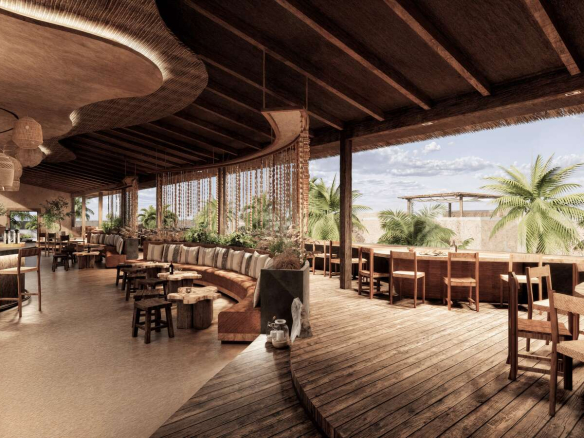
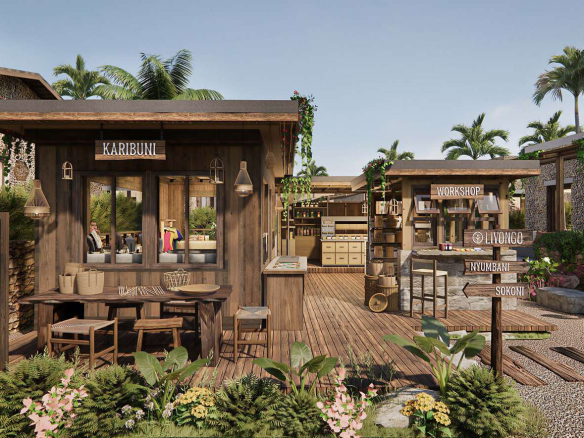
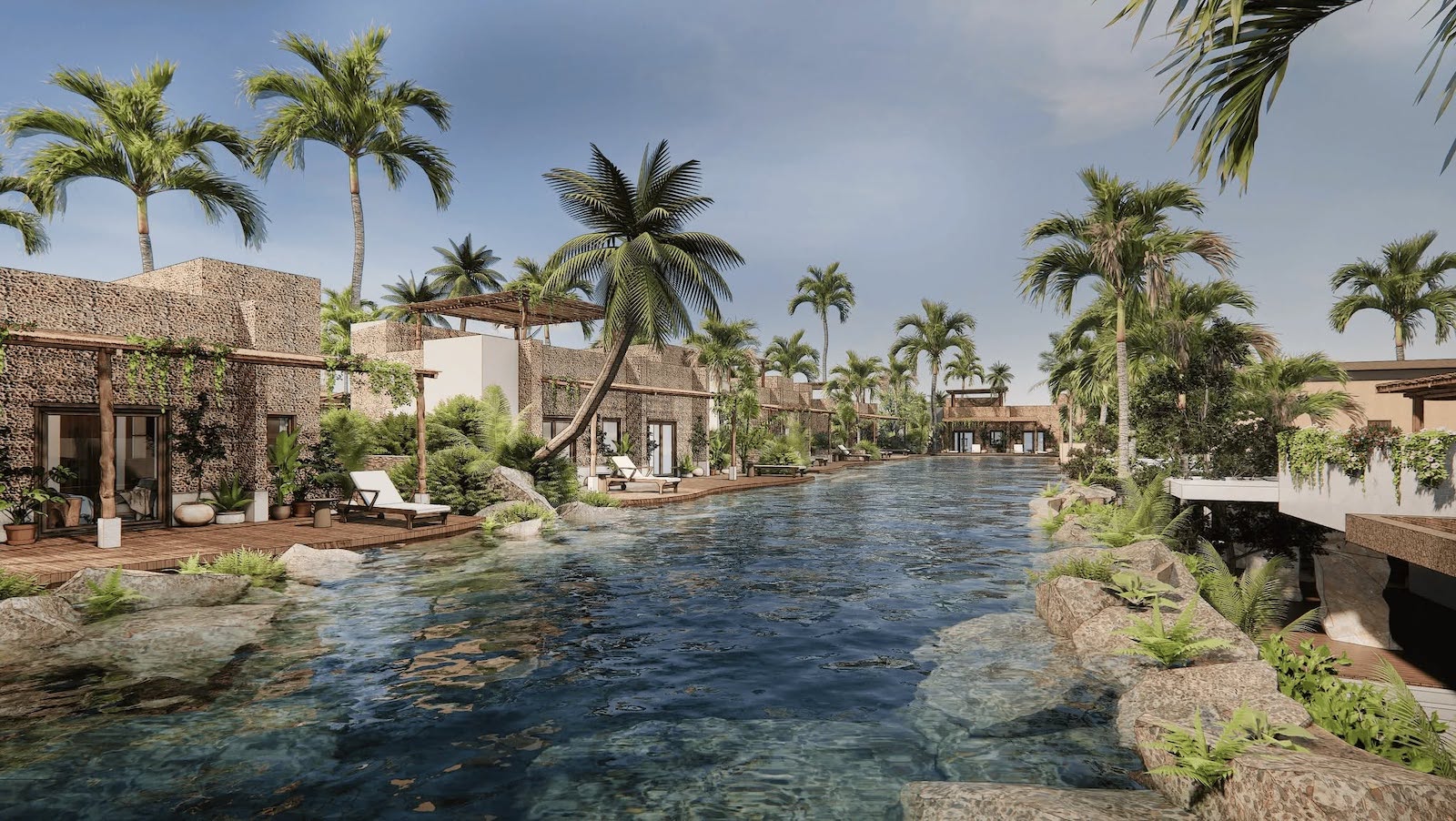
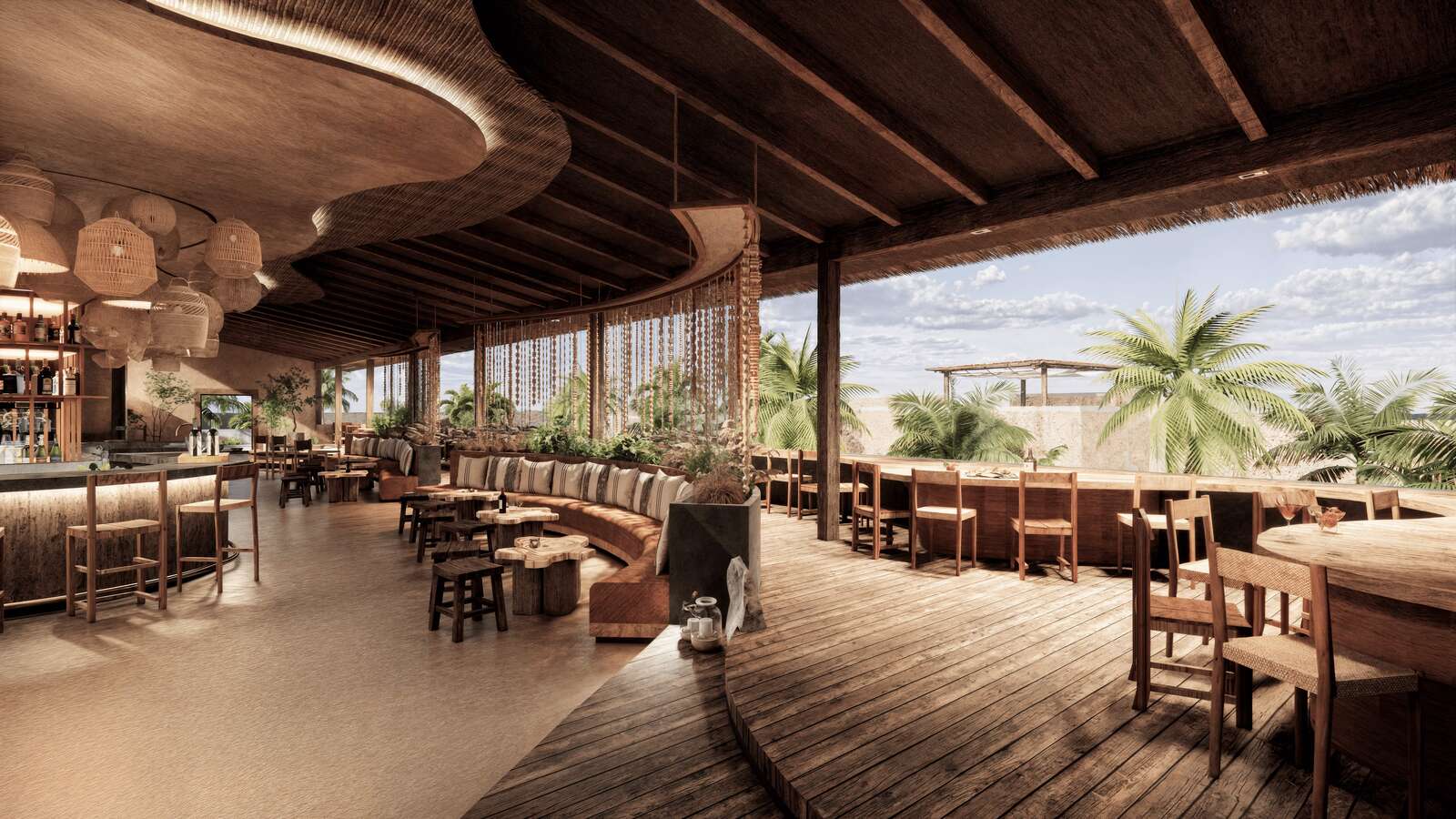
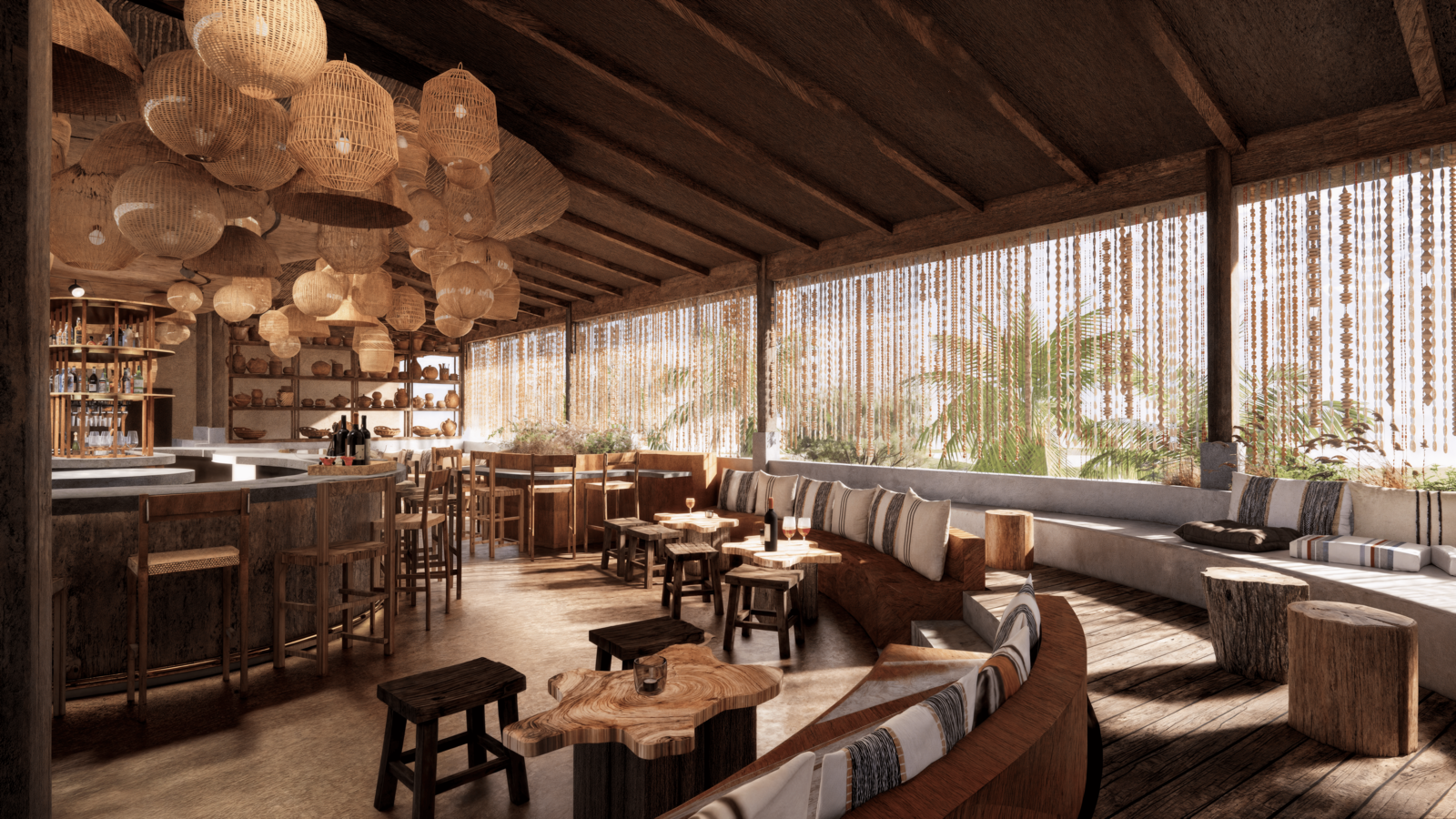
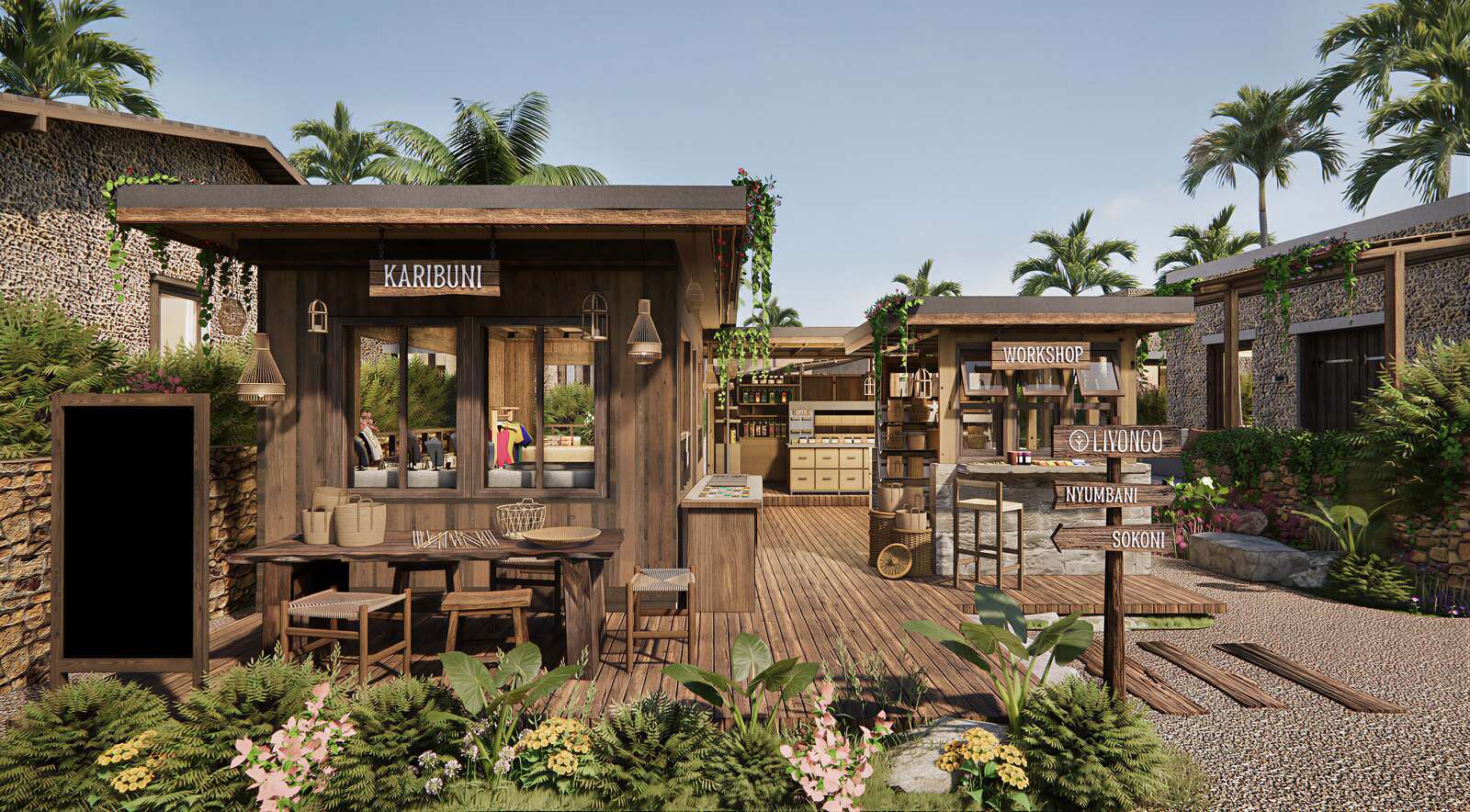
Amenities include a saltwater lagoon pool connecting the villas to a central café, an integrative spa with mist and steam rooms inspired by traditional steam bathing practices, and an artisan village with market stalls for local producers. A communal dining centre features open-fire cooking, while rooftop gathering spaces with fire pits provide places to socialise and take in ocean views.
The project integrates local artisans, craft traditions, and culinary culture into its operational model, creating programming that connects residents and guests to Zanzibar’s cultural landscape. This includes market stalls for local makers, cooking workshops, and material storytelling that foregrounds place and process.
The amenities and social spaces are designed to foster interaction between owners, guests, and the surrounding Kendwa community.
Sustainability & Community
Liyongo’s sustainability approach prioritises passive environmental design, including natural ventilation, shading and water efficiency, rather than certification-driven metrics. Construction incorporates local materials and labour where feasible, with the aim of reducing transportation impacts and supporting regional craft economies.
A formal partnership with Kendwa village leadership has been established to address local infrastructure needs, including clean water access, waste management systems and educational support. Specific commitments and funding structures remain under negotiation, with these initiatives intended to form part of the project’s operational model rather than an ancillary corporate social responsibility programme.
The artisan village is intended to provide market access and revenue-sharing opportunities for local makers, food producers and service providers. Planned programming includes workshops, craft demonstrations and culinary experiences designed to create economic opportunities for Kendwa residents within the development’s hospitality operations.
Environmental and community considerations are intended to inform design and operational decisions rather than serve as standalone marketing differentiators. The approach centres on integrating these priorities into the development’s physical design and ongoing operations.
Location – Where Coastal Rhythm Meets Village Soul
Liyongo is located in the coastal forests of Kendwa, approximately a ten-minute walk from the shoreline. Kendwa sits on Zanzibar’s north-west coast and is known for its relatively limited tidal variation, established tourism infrastructure and proximity to Nungwi, the island’s northernmost settlement.
Set back from the main coastal road, the site occupies elevated terrain that benefits from natural airflow and separation from beachfront congestion. The location provides access to Kendwa’s beaches, local markets and cultural activities while maintaining spatial separation from the village centre.
Kendwa is approximately a 60-minute drive from Zanzibar City and Abeid Amani Karume International Airport. The north coast is an established year-round tourism destination, supported by road infrastructure, utilities and a mix of small-scale guesthouses, boutique hotels and larger resort developments.
Buying Property in Zanzibar: Liyongo FAQs
Answers to common questions about buying property in Zanzibar at Liyongo, including villa prices, leasehold ownership, the managed rental pool, annual costs, Kendwa and the delivery programme.
Can I live at Liyongo full time?
No. Every villa participates in the managed rental pool, and owners have three weeks of personal use each year with advance notice and outside peak periods. Liyongo is designed for personal stays within a managed hospitality operation rather than full-time occupation.
How much does a villa at Liyongo cost?
Prices start at $145,000 for Kwetu, a 50 m² studio villa, and reach $525,000 for Jumba, a three-bedroom villa with 161 m² of internal space. Prices were verified on 31 August 2026, are stated in US dollars and exclude Zanzibar’s 15% VAT, payable by the purchaser.
What is included in the villa price?
The current specification, Financial Information Pack and sale agreement define what is included with each villa. Buyers should review those documents together. Every villa is sold fully furnished; the furniture pack is included in the list price. VAT, legal fees and annual service charges are additional to the listed villa price.
How does the Liyongo villa payment plan work?
A five percent non-refundable payment reserves the selected villa. Twenty-five percent is due on signing, followed by three construction-linked instalments of twenty percent and a final ten percent at handover.
How does the managed rental pool work?
The rental pool brings all sixty individually owned villas under one reservations, marketing and operating system. Guest revenue and applicable operating costs are handled under the management and rental-pool agreements rather than each owner marketing and managing a villa independently. Every villa participates. Owners have three weeks of personal use each year; the villa remains within the managed hospitality inventory for the remainder.
Who runs the rental programme?
Liyongo’s on-site management operation coordinates guest service, housekeeping, maintenance, reservations and owner stays across all sixty villas. The management agreement identifies the responsible parties and their obligations.
How is income reported to owners?
Owner statements record occupancy, guest revenue, operating deductions and distributions through the pool. The rental-pool agreement and Financial Information Pack explain the calculation and reporting method in full.
How do I book my three weeks?
Owners book their three-week allocation in advance and outside peak periods through the process set out in the management agreement. The exact notice period remains to be confirmed in the final legal documentation.
What are the annual service charges for a Liyongo villa?
Annual service charges currently range from $1,500 to $4,800, depending on the villa type. The figures were verified on 31 August 2026 and may change as the operating budget and service schedule are finalised.
Is VAT included in the villa price?
No. Zanzibar VAT is charged at 15% and is payable by the purchaser in addition to the listed villa price.
Can foreigners buy property in Zanzibar?
Yes. Foreign buyers can acquire registered leasehold interests in qualifying developments under Zanzibar’s condominium framework. The lease identifies the property and governs occupation, letting, resale and inheritance. At Liyongo, each of the sixty villas carries an individual leasehold interest and participates in the managed rental pool. Buyers should take independent Zanzibar legal advice before signing a reservation or sale agreement.
Is property in Zanzibar freehold or leasehold?
Property offered to foreign buyers in Zanzibar is generally leasehold rather than freehold. At Liyongo, each villa is sold with a 99-year leasehold registered under Zanzibar’s condominium framework.
When will Liyongo be finished?
Liyongo is being delivered in two phases, with first handovers planned for Q4 2028. The full completion date depends on the construction programme across all three phases and should not be inferred from the first-handover date.
What are the two phases?
The sixty villas are divided across two phases: thirty villas in Phase 1 and thirty villas in Phase 2. Payments are linked to construction progress under the agreed schedule.
Disclaimer: The accuracy of all listing information including but not limited to price, property size, and features, is deemed reliable but not guaranteed and may change without prior notice. It should, therefore, be verified through personal inspection by and/or with the appropriate professionals.
Liyongo
Contact me
User registration is disabled for demo purpose.
Forgot Password
Please enter your username or email address. You will receive a link to create a new password via email.